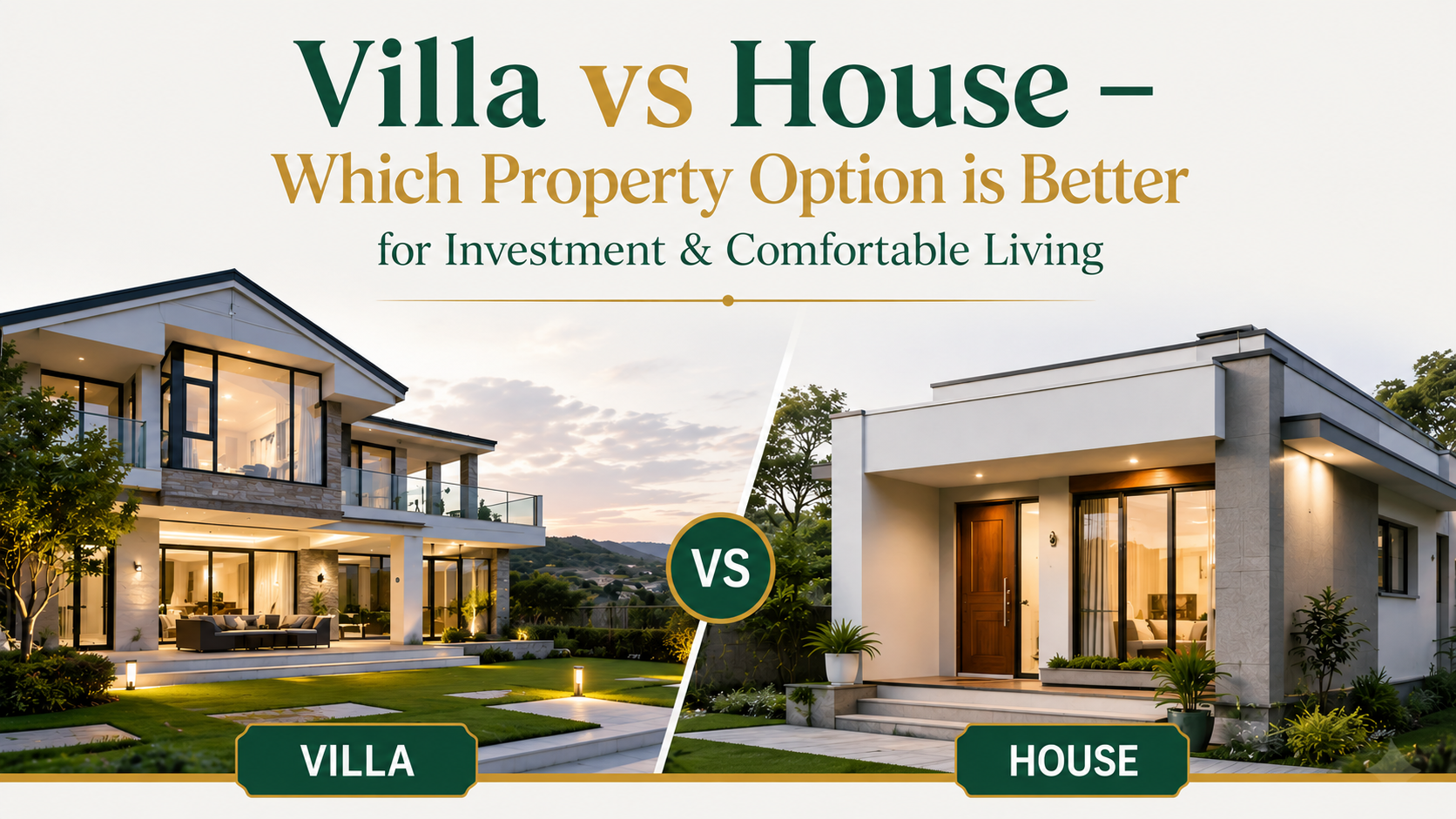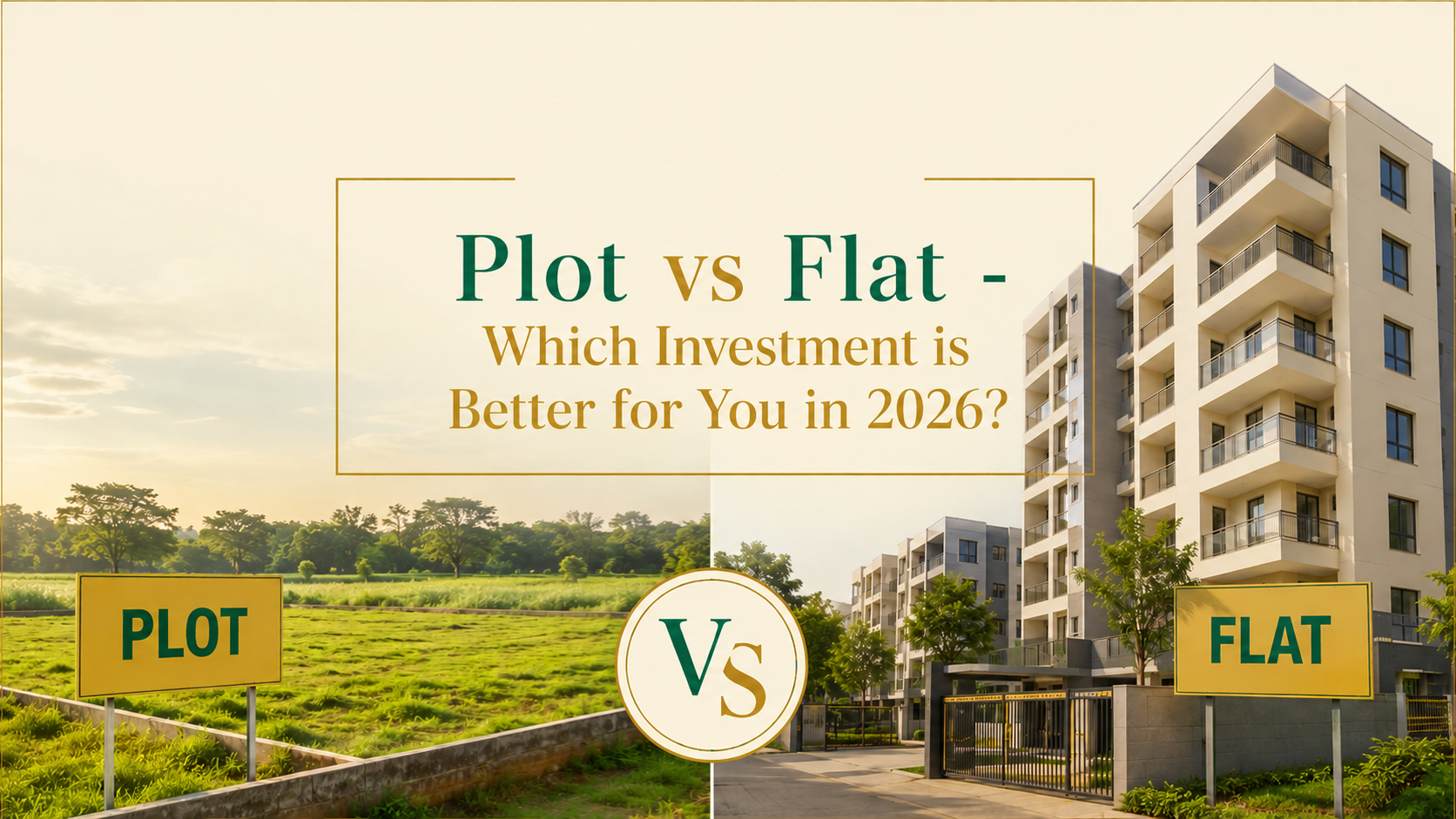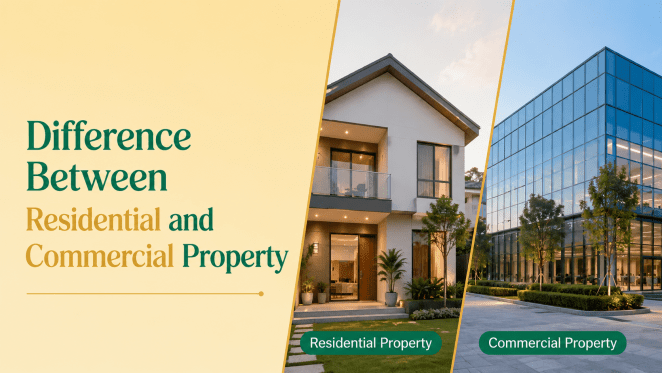
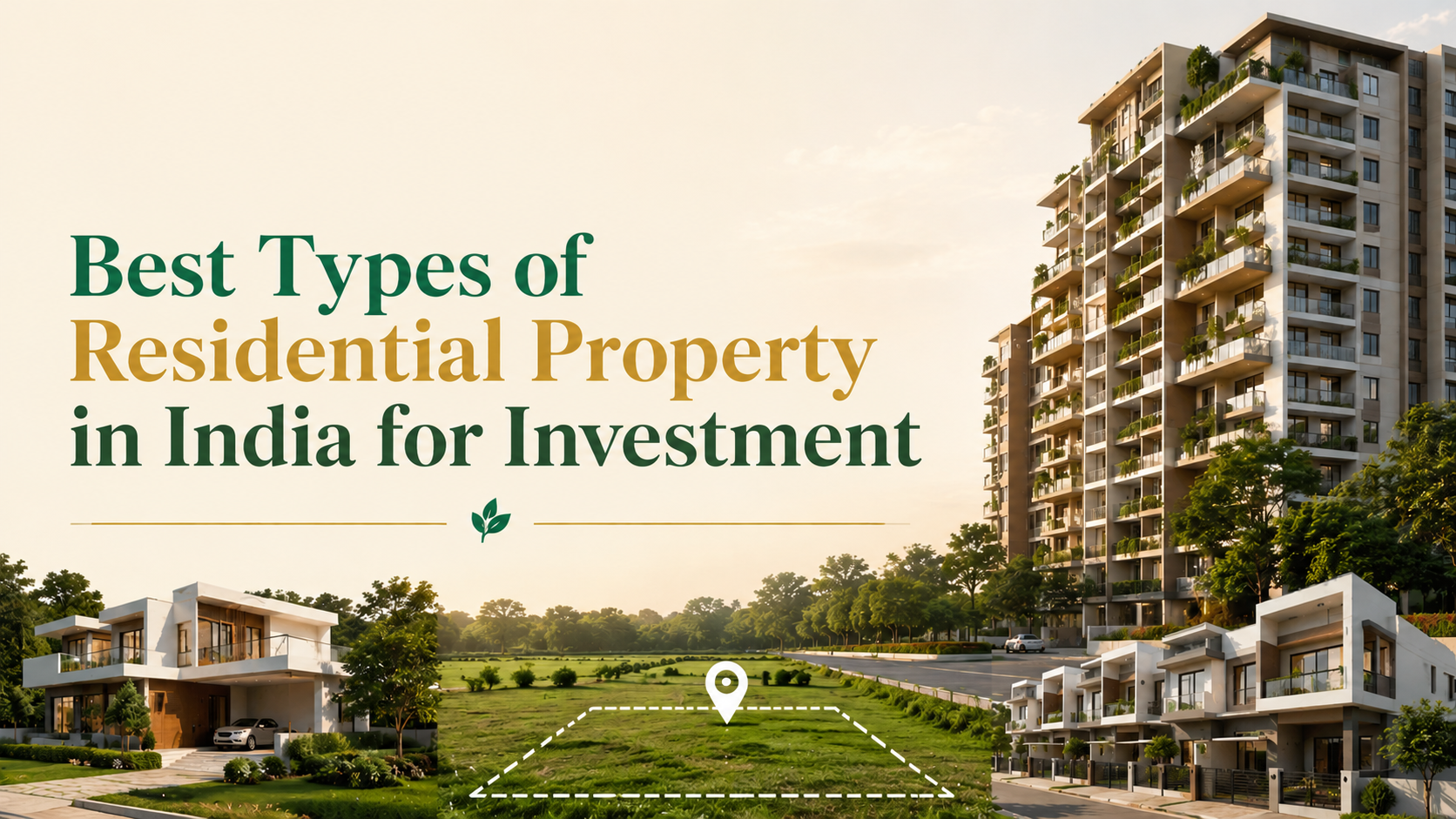
In India, there are several types of residential properties, including apartments, villas, independent houses, townhouses, row houses, studio apartments, penthouses, and builder floors. Each option offers different benefits based on your budget, lifestyle, and investment goals.
Apartments are popular for their affordability and modern amenities, while villas provide more space and privacy. Some property types offer better rental income, while others have stronger long-term value growth, making it important to choose the right option based on your needs.
In this blog, we will explore all major types of residential property and help you understand which option is best for living and investment.
What is Residential Property?
A residential property is real estate built primarily for people to live in, providing shelter, comfort, and security. Unlike commercial or industrial property built for business, residential real estate is designed around daily life.
India's residential market is enormous: over 225,000 housing units were sold in just the first nine months of 2024, and the national rental market is valued at over USD 20 billion. Residential property typically serves three roles:
- Primary housing - your permanent home near work, family, or school
- Secondary housing - a vacation retreat or seasonal escape
- Investment asset - rent it for income while the capital value grows
Major Types of Residential Property 2026
Explore the most popular types of residential properties in 2026 and understand their features, benefits, and suitability for different buyers and investors.
|
Property Type |
Entry Price (₹) |
Rental Yield |
Maint./Month |
Privacy |
Best For |
|
Studio Apartment |
15-30 L |
3-5% (Highest) |
₹2.5k-4k |
Low |
Rental income, singles |
|
1 BHK Flat |
20-40 L |
2.5-3.5% |
₹3k-5k |
Medium |
First-time buyers |
|
2 BHK Flat |
35-70 L |
2.5-3.5% |
₹5k-8k |
Medium |
Families, appreciation |
|
Builder Floor |
40-90 L |
3-4% |
₹5k-8k |
Med–High |
Budget-conscious buyers |
|
Townhouse / Row House |
45-120 L |
2.5-3% |
₹6k-10k |
Medium |
Mid-income families |
|
Independent House |
60-150 L |
2-3% |
₹8k-15k |
High |
Large families |
|
Villa |
80-200 L |
2-3% |
₹10k-20k |
High |
Luxury lifestyle |
|
Penthouse |
100-300 L |
2-2.5% |
₹15k-30k |
High |
Prestige, HNI investors |
Note: Prices are indicative for Tier-1 cities. Tier-2 cities average 25–40% lower.
All 8 Types of Residential Property
Explore the most popular types of residential properties in 2026 and understand their features, benefits, and suitability for different buyers and investors.
1. Apartments / Flats
Entry Price: ₹20 L – ₹70 L | Rental Yield: 2.5–3.5%
Self-contained units within multi-storey buildings. India's most widely bought residential property, available as 1BHK to 4BHK in gated complexes.
Pros:
- Lowest entry cost of all multi-room options
- Shared amenities, gym, pool, 24/7 security
- Low individual maintenance burden
- High resale liquidity in metros
Cons:
- Limited personal space and storage
- Shared walls can cause noise issues
- Monthly society maintenance charges apply
Best For: First-time buyers, salaried professionals, rental investors
2. Villas
Entry Price: ₹80 L – ₹2 Cr+ | Rental Yield: 2–3%
Standalone luxury homes often in gated communities with private gardens, car parking for 2-4 vehicles, and premium construction quality.
Pros:
- Maximum privacy and personal outdoor space
- Community pools, parks, and gyms often included
- Customisable interiors and extensions
Cons:
- High entry cost and maintenance (₹10k–20k/mo)
- A narrower resale market than apartments
- Usually located outside city centres
Best For: Large families, luxury buyers, long-term wealth preservation
3. Independent Houses / Bungalows
Entry Price: ₹60 L – ₹1.5 Cr | Rental Yield: 2–3%
Detached, owner-built homes on private plots. Single or multi-storey, common in Tier-2 cities and older residential neighbourhoods.
Pros:
- Full design and renovation freedom
- Accessibility for elderly residents (single-storey)
- No society rules or HOA fees
Cons:
- Self-managed security
- Higher maintenance responsibility
- No shared amenities
Best For: Extended families, Tier-2 city buyers, custom home builders
4. Townhouses
Entry Price: ₹50 L – ₹1.2 Cr | Rental Yield: 2.5–3%
Multi-storey homes with shared side walls but individual entrances and small private yards, the middle ground between flat and villa.
Pros:
- More floor area than equivalent apartments
- Community amenities often included
- Better privacy than standard flats
Cons:
- Shared walls with neighbours
- HOA / maintenance charges apply
- Stairs can limit accessibility
Best For: Growing middle-income families seeking space on a budget
5. Row Houses
Entry Price: ₹45 L – ₹1 Cr | Rental Yield: 2.5–3%
A row of single-family homes sharing side walls. Each unit has its own entrance, small garden, and parking. Popular in Pune and Ahmedabad suburbs.
Pros:
- Villa-like privacy at lower cost
- Strong sense of community
- Individual entrance and small garden
Cons:
- Shared party walls
- Limited garden depth
- Fewer amenities vs gated complexes
Best For: Community-oriented buyers, suburban lifestyle seekers
6. Studio Apartments
Entry Price: ₹15 L – ₹30 L | Rental Yield: 3–5% (Highest)
Open-plan single-room units where the living, sleeping, and dining areas share one space. Smallest format, highest rental return ratio.
Pros:
- Lowest entry price of all residential options
- Highest rental yield (3–5%)
- Strong demand from students and working singles
Cons:
- Very limited living space
- Low long-term capital appreciation
- Difficult to resell to family buyers
Best For: Rental investors, first-time buyers in IT corridors
7. Penthouses
Entry Price: ₹1 Cr – ₹3 Cr+ | Rental Yield: 2–2.5%
Premium units occupying the top floor(s) of high-rise towers with private terraces, panoramic views, double-height ceilings, and high-end finishes.
Pros:
- Unbeatable views and exclusivity
- Strong long-term appreciation in prime areas
- Premium amenities and concierge services
Cons:
- Highest purchase and maintenance cost
- Very niche resale market
- Elevator dependency
Best For: HNI investors, lifestyle buyers, prestige-driven purchasers
8. Builder Floors
Entry Price: ₹40 L – ₹90 L | Rental Yield: 3–4%
Individual floors of low-rise buildings (typically G+2 or G+3) are sold as independent units. Popular in Delhi-NCR and Hyderabad. Legal only when RERA-registered.
Pros:
- Higher privacy than apartments
- Better rental yield than villas
- Affordable independent-living format
Cons:
- Self-managed security
- No shared amenities
- Legal risk if not RERA-registered
Best For: Budget-conscious buyers wanting more privacy than flats
Best Locations by Property Type (2026)
Discover the top locations for different property types in 2026, based on lifestyle needs, investment potential, rental demand, and future growth prospects.
For Apartments
|
City |
Top Localities |
Price Range |
Rental Yield |
|
Mumbai |
Andheri East, Thane West, Wadala, Panvel |
₹35-70 L |
2.5-3.5% |
|
Pune |
Baner, Wakad, Aundh, Hinjewadi |
₹40-80 L |
2.5-3.5% |
|
Bengaluru |
Whitefield, Sarjapur, Electronic City |
₹45-85 L |
3-4% |
|
Hyderabad |
Gachibowli, Kondapur, Nanakramguda |
₹40-75 L |
3-4% |
|
Nashik |
Gangapur Road, Satpur, Ambad |
₹25-50 L |
2.5-3% |
For Villas
|
City |
Top Localities |
Price Range |
|
Mumbai |
Alibaug, Lonavala, Bandra West |
₹1.5-3 Cr |
|
Pune |
Kothrud, Viman Nagar, Baner |
₹1.2-2 Cr |
|
Goa |
Calangute, Candolim, Arpora |
₹1-2.5 Cr |
|
Nashik |
Gangapur, Trimbak Road |
₹80 L-1.5 Cr |
Note- All data are taken as references from other Internet sources.
Conclusion
India's residential property market in 2026 offers a wide range of options for every type of buyer and investor. Whether you are looking for affordable studio apartments, modern flats, spacious independent houses, or luxury villas, each property type comes with its own advantages. The right choice depends on your budget, lifestyle, rental income expectations, and long-term investment goals.
Looking for a peaceful weekend home surrounded by nature? Nature Wealth offers eco-friendly home and villa plot projects in Nashik and Igatpuri, designed for families who want to escape the city and spend quality time together.
Surrounded by greenery, hills, and fresh air, our projects provide the perfect setting to build your dream villa, relax on weekends, and enjoy a healthier lifestyle close to nature. Contact Nature Wealth to explore the right weekend home investment for your family.
Frequently Asked Questions
1. What are the main types of residential property in India?
There are 8 key types: apartments/flats (1BHK-4BHK), studio apartments, villas, independent houses/bungalows, townhouses, row houses, penthouses, and builder floors.
2. Which type gives the highest rental yield?
Studio apartments lead with 3-5% annual rental yield, followed by builder floors at 3-4%.
3. What is the difference between a flat and an apartment?
No structural difference. 'Flat' is the common Indian/British term; 'apartment' is the international usage.
4. Which property is best for long-term capital appreciation?
Mid-premium 2BHK and 3BHK apartments in emerging metro suburbs 8-12% annually.
5. What is a builder floor and is it legal?
An individual floor of a low-rise building sold as an independent unit. Legal only if RERA-registered and with an approved plan and Occupancy Certificate





.png)
.png)















.png)

.png)



_(1).png)